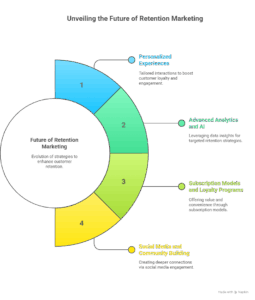
As companies plan, customer retention marketing is moving beyond the standard loyalty programs and infrequent email promotions. In today’s environment, smarter data, shifting customer attitudes, and new technology all are driving brands to form richer, more individualized connections. For companies committed to driving client retention and customer satisfaction, staying on top of these trends is critical to remaining competitive.
One of the most significant trends is the use of predictive analytics in customer retention initiatives. Instead of acting after a customer indicates they are about to leave, predictive models analyze behavior and engagement insights to identify churn risk before it occurs. This enables companies to proactively intervene such as with targeted offers, reminders, or surveys to get customers back on track at the optimal time. Predictive analytics makes retention less of a response and more of a proactive initiative, boosting the opportunity to maintain loyal customers.
A second trend that’s increasingly on the rise is hyper-personalization through AI. It’s more than calling customers by name and suggesting similar items. Brands can now utilize real-time information from web browsing, purchase history, and even customer survey responses to send content and promotions that match individual needs and context. For instance, product suggestions based on season, location, or recent activities build a customized experience that truly relates, increasing customer satisfaction and engagement.
Customer retention methods are also being redefined by the transition from transactional to emotional loyalty. Contemporary consumers seek authenticity, shared values, and human experience. Brands are increasingly investing in storytelling, community, and purpose-driven initiatives to foster a sense of connection among customers with something larger than themselves. Engagement in social causes or sustainability isn’t merely a branding decision; it becomes part of the reason customers remain and champion the brand.
Integrated loops of feedback are also on the rise. Simply conducting the odd survey isn’t enough strong brands are building frameworks where feedback is directly used to drive product refreshes, service enhancements, and communication plans. Informing customers about these changes reinforces trust and demonstrates that customer input drives the brand, which in turn increases both customer satisfaction and client retention.
Subscription and membership models remain key retention marketing trends. In addition to predictable revenue, they offer a systematic approach to presenting continuous value. However, the emphasis is moving away from merely shipping repeat products or content to creating dynamic experiences that engage customers. This could involve customized updates, special access, or dynamic loyalty points that adjust according to user behavior.
Reward and incentive programs are also changing. Rather than relying on fixed point schemes, brands are creating more innovative and engaging experiences, such as tailored challenges, community leaderboards, or surprise rewards. These features generate fun around engagement, creating emotional value that deepens loyalty independent of the product itself.
Automation is growing more intelligent and balanced. Instead of blasting mass emails to a whole list, companies are creating dynamic flows that adapt according to customer behavior, preferences, and satisfaction ratings, such as NPS. That way, there’s still efficiency without losing the personal touch, a balance that’s at the heart of today’s customer retention strategies.
The content’s role is also growing. Value and learning content, such as how-to instructions, webinars, and expert advice, keep customers engaged between purchases. By providing consistently valuable content, brands become an integral part of customers’ lives, rather than merely sellers, which nurtures loyalty in the long run.
Voice, chat-bots, and conversational AI are also becoming part of retention marketing. Prompt and welcoming responses to queries or support inquiries keep customers satisfied, particularly in critical moments. As AI technology continues to evolve, it is also utilized to provide customized recommendations and reminders within the customer journey, which can be easily implemented.
Lastly, transparency and data privacy are defining the future of retention marketing. Customers want brands to utilize their data responsibly, and companies that transparently disclose how data is gathered and used foster greater trust. Protecting privacy while providing tailored experiences is emerging as a competitive edge over being merely a law.
These trends herald an era of retention marketing that isn’t a collection of one-size-fits-all practices but rather a living, customer-focused strategy. Brands that embrace predictive analytics, personalization, genuine storytelling, and on-going feedback will not only decrease churn but also make customers lifelong allies.
Ultimately, customer retention is shifting away from afterthought status for marketers to a core driver of business expansion. Those organizations that are willing to test, innovate, and make the customer experience their top priority will be at the forefront of constructing lasting loyalty and customer satisfaction that differentiates them.